Staring into the night sky reveals a quiet tapestry of stars, but the reality of the cosmos is far more dynamic, violent, and utterly strange than you might suspect. Over the past century, astronomers have revolutionized your understanding of reality by capturing the echoes of the Big Bang, imaging the unseeable shadows of black holes, and detecting the ripples of gravity itself. These monumental space discoveries fundamentally shattered old paradigms and rewrote the textbooks on how galaxies form, why the cosmos expands, and where life might exist. You will explore ten groundbreaking findings that mapped the invisible forces of dark matter and dark energy, reshaping everything humanity knows about the vast universe we call home.
1. The Echo of the Big Bang: Cosmic Microwave Background
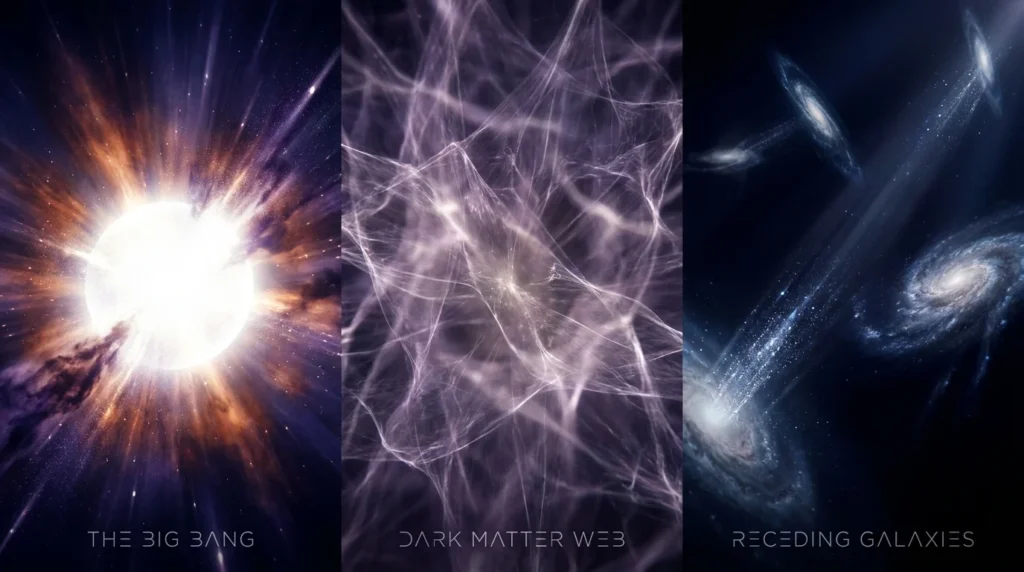
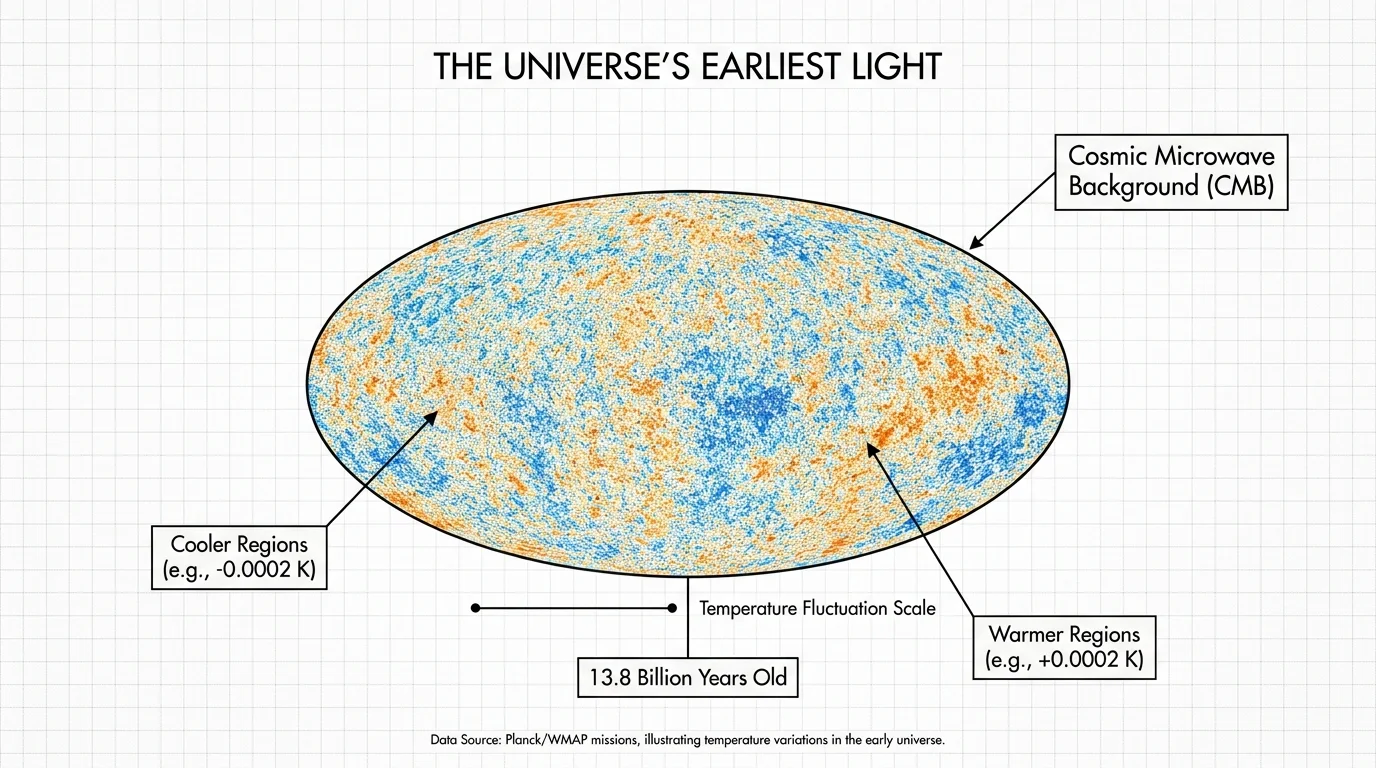
Before 1965, scientists heavily debated whether the universe had a definitive beginning. Arno Penzias and Robert Wilson settled this argument by accident while calibrating a sensitive radio antenna in New Jersey. They detected a persistent background noise emanating uniformly from every direction in the sky. This faint hum was the cosmic microwave background radiation—the residual heat left over from the Big Bang. By mapping this afterglow, astronomers determined the universe is roughly 13.8 billion years old. This discovery provided the foundational evidence that our universe expanded from an unimaginably hot, dense singularity, allowing you to trace the evolutionary timeline of everything in existence.

2. Worlds Beyond Our Sun: The First Exoplanets
For centuries, humanity wondered if other stars hosted planets. In 1995, astronomers Michel Mayor and Didier Queloz confirmed the existence of 51 Pegasi b, a gas giant orbiting a sun-like star fifty light-years away. They measured the slight wobble of the host star caused by the gravitational pull of the orbiting planet. Today, researchers have cataloged over five thousand confirmed exoplanets, radically changing how you view Earth’s place in the cosmos. You now know that planetary systems are the rule rather than the exception. Telescopes continuously scan habitable zones, bringing humanity closer to finding environments capable of supporting extraterrestrial life.
3. The Invisible Scaffolding: Dark Matter
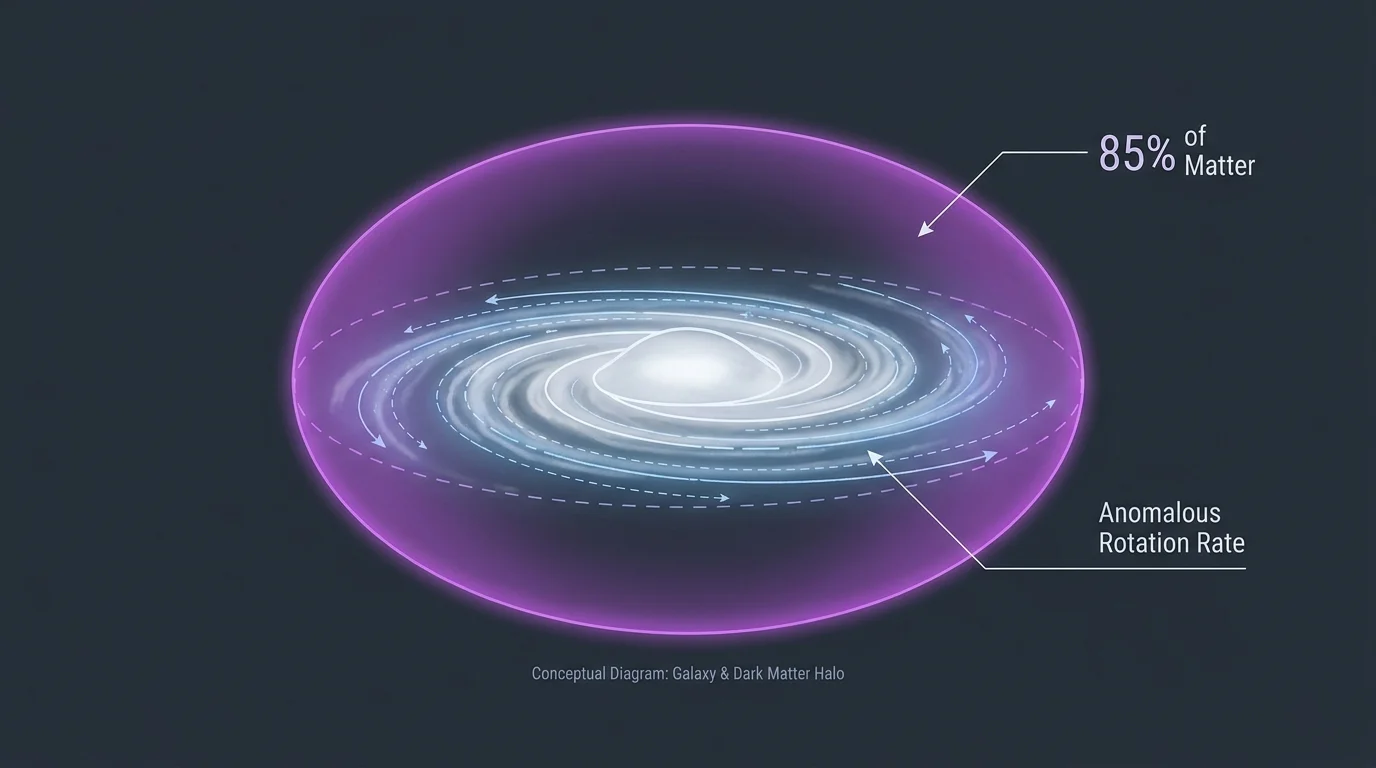
When Vera Rubin studied the rotation rates of galaxies in the 1970s, she noticed something impossible. The stars at the outer edges of spiral galaxies moved far too fast; according to the laws of physics, these galaxies should have ripped themselves apart. She concluded that an invisible mass must exert the necessary gravitational glue to hold these stellar structures together. This invisible substance, known as dark matter, accounts for roughly eighty-five percent of the matter in the universe. Although scientists cannot observe it directly, they map its influence through gravitational lensing. Understanding dark matter gives you the missing blueprint for galactic formation.
4. The Runaway Universe: Accelerating Expansion
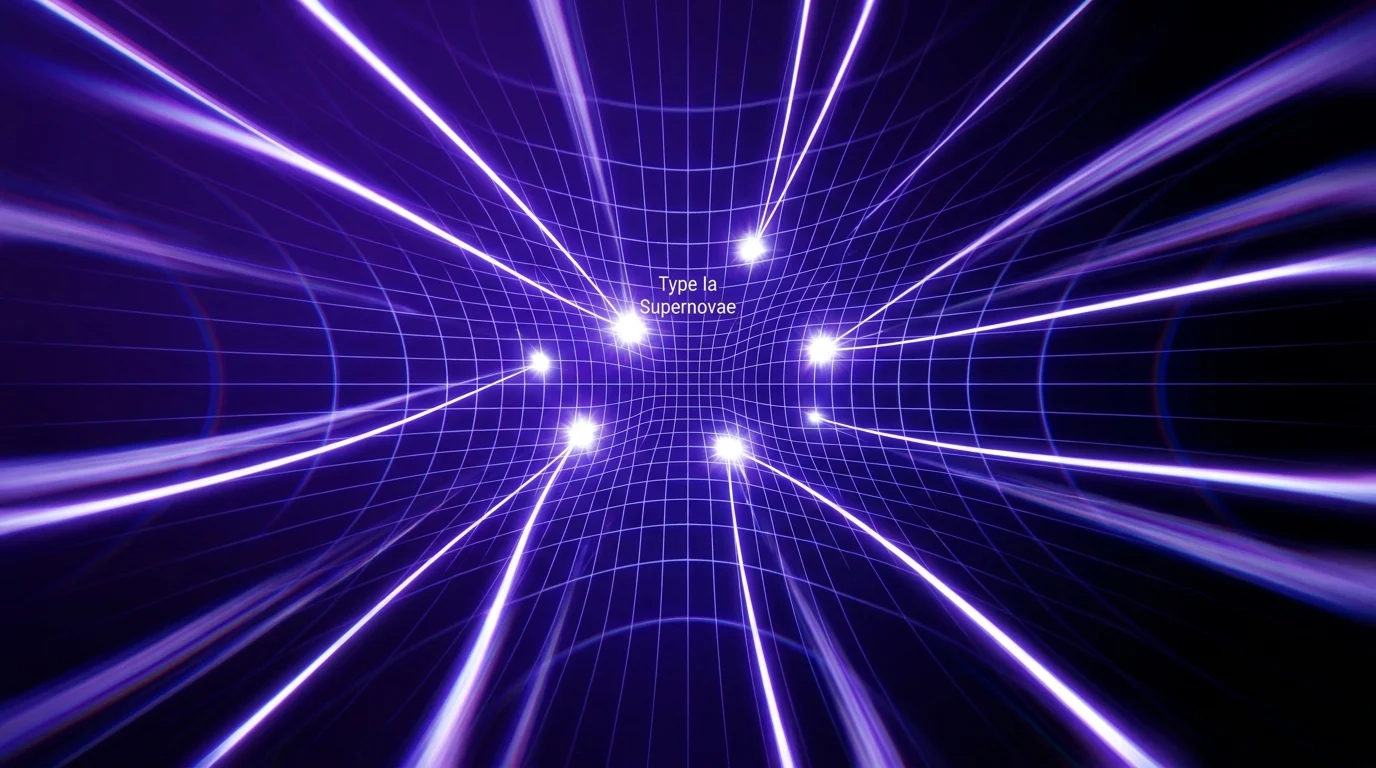
In 1998, two independent teams measured the rate at which the expansion of the universe was slowing down due to gravity. By observing distant Type Ia supernovae—exploding white dwarfs that serve as cosmic yardsticks—they discovered the exact opposite. The expansion of the universe is actually speeding up. Scientists attribute this acceleration to a mysterious force called dark energy, which makes up about sixty-eight percent of the cosmos. This finding fundamentally altered the fate of the universe. Instead of eventually collapsing back in on itself, the cosmos will likely continue to expand forever, leaving you with a profound understanding of the universe’s freezing destiny.
5. Ripples in Spacetime: Gravitational Waves
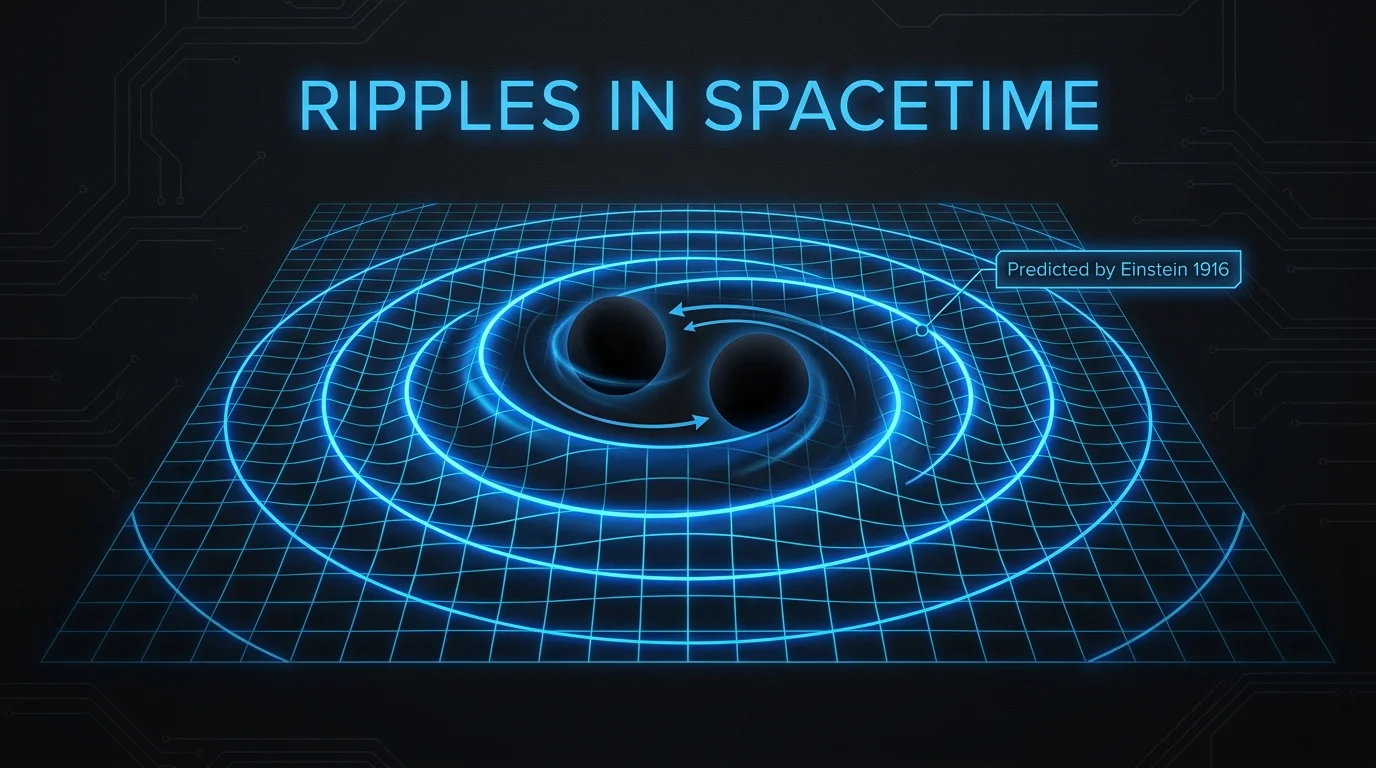
Albert Einstein predicted gravitational waves in 1916, suggesting that massive accelerating objects would create ripples in the fabric of spacetime. Exactly a century later, the Laser Interferometer Gravitational-Wave Observatory detected these ripples for the first time. The signal originated from two black holes spiraling into each other and merging over a billion light-years away. Detecting these waves gave astronomers an entirely new sense; instead of merely looking at the universe, scientists can now listen to it. Gravitational wave astronomy allows you to probe the most violent and energetic events in the cosmos, shedding light on phenomena that emit no visible light whatsoever.
6. Photographing the Unseeable: The First Black Hole Image
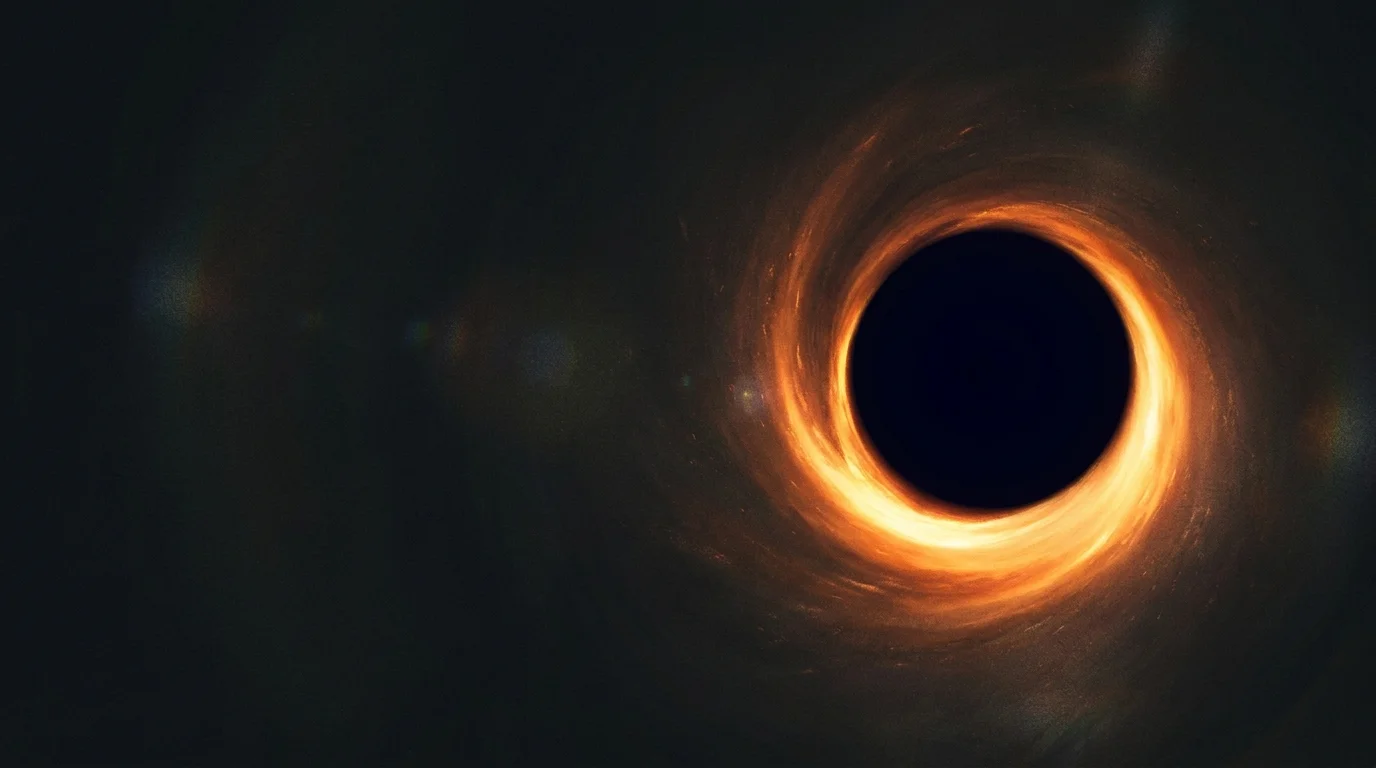
Black holes trap all light, making them theoretically impossible to photograph. However, in 2019, the Event Horizon Telescope collaboration unveiled an image of the supermassive black hole at the center of the Messier 87 galaxy. Researchers linked eight radio observatories across the globe to create a virtual telescope the size of Earth. The data processing required petabytes of raw information shipped on physical hard drives because the files were too massive to transfer over the internet. The resulting image displayed a bright ring of superheated gas bending around a dark central region—the black hole’s shadow. This monumental technical achievement provided visual proof of extreme gravity at work, allowing you to visualize black hole mechanics and test general relativity.
7. The Ubiquity of Water: Subsurface Oceans
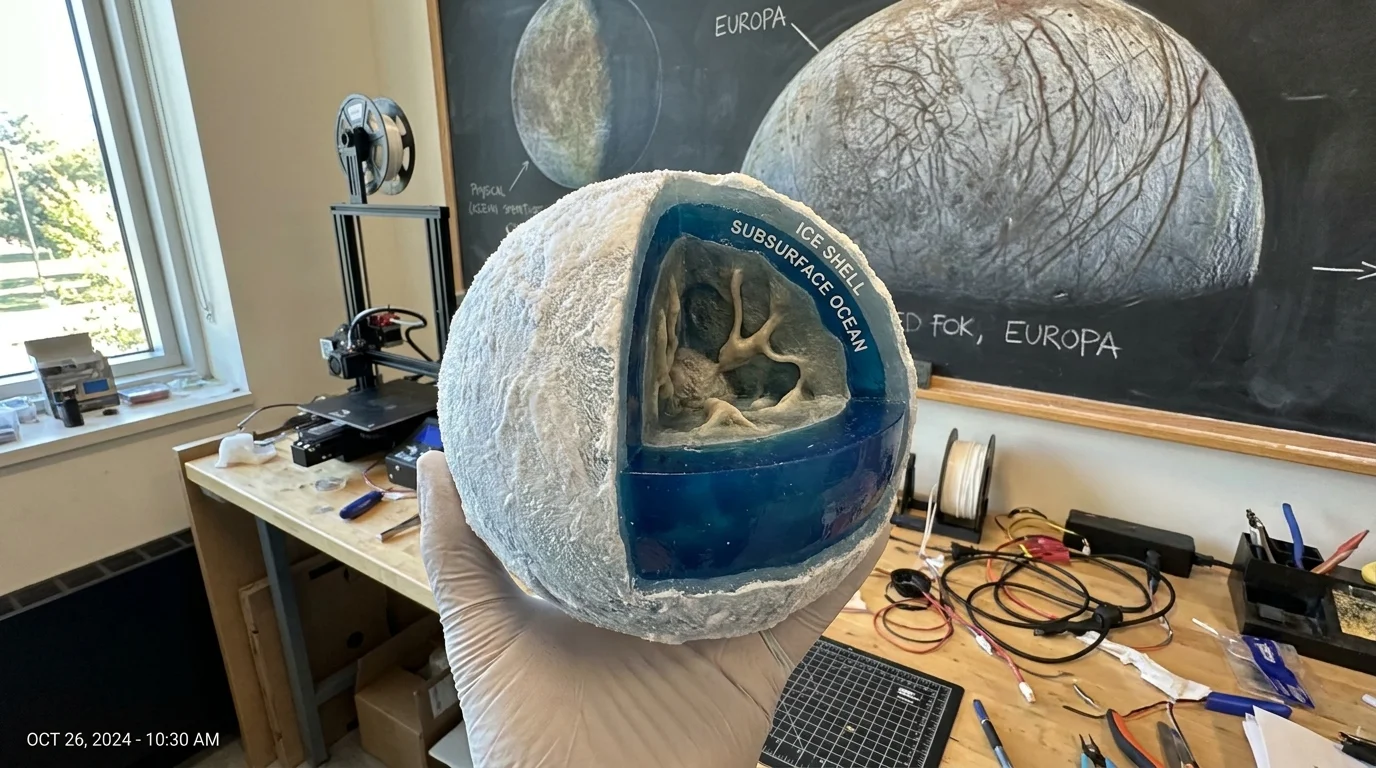
You might think of Earth as the only watery oasis in the solar system, but space probes have revealed a surprisingly wet cosmic neighborhood. The Galileo probe found evidence of a vast, salty ocean beneath the icy crust of Jupiter’s moon Europa. Later, the Cassini spacecraft flew through plumes of water vapor erupting from Saturn’s moon Enceladus, detecting organic molecules in the spray. These discoveries fundamentally shifted the search for extraterrestrial life away from the traditional habitable zone. If liquid water and organic chemistry exist in the frozen outer solar system, astrobiologists recognize that life might thrive in environments completely alien to our own.
8. The Ancient Galactic Dawn: Earliest Galaxies
Launched in 2021, the James Webb Space Telescope peers deeper into the infrared spectrum than any previous observatory, capturing light that has traveled for over thirteen billion years. Almost immediately upon turning its mirrors to the deep sky, the telescope spotted galaxies that existed just a few hundred million years after the Big Bang. Shockingly, these early galaxies appeared much larger, brighter, and more structured than cosmological models predicted. These findings force astrophysicists to rethink the timeline of cosmic evolution. By analyzing the data from this magnificent instrument, you gain unprecedented insights into the birth of the earliest galactic structures.
9. Flashes from the Deep: Fast Radio Bursts
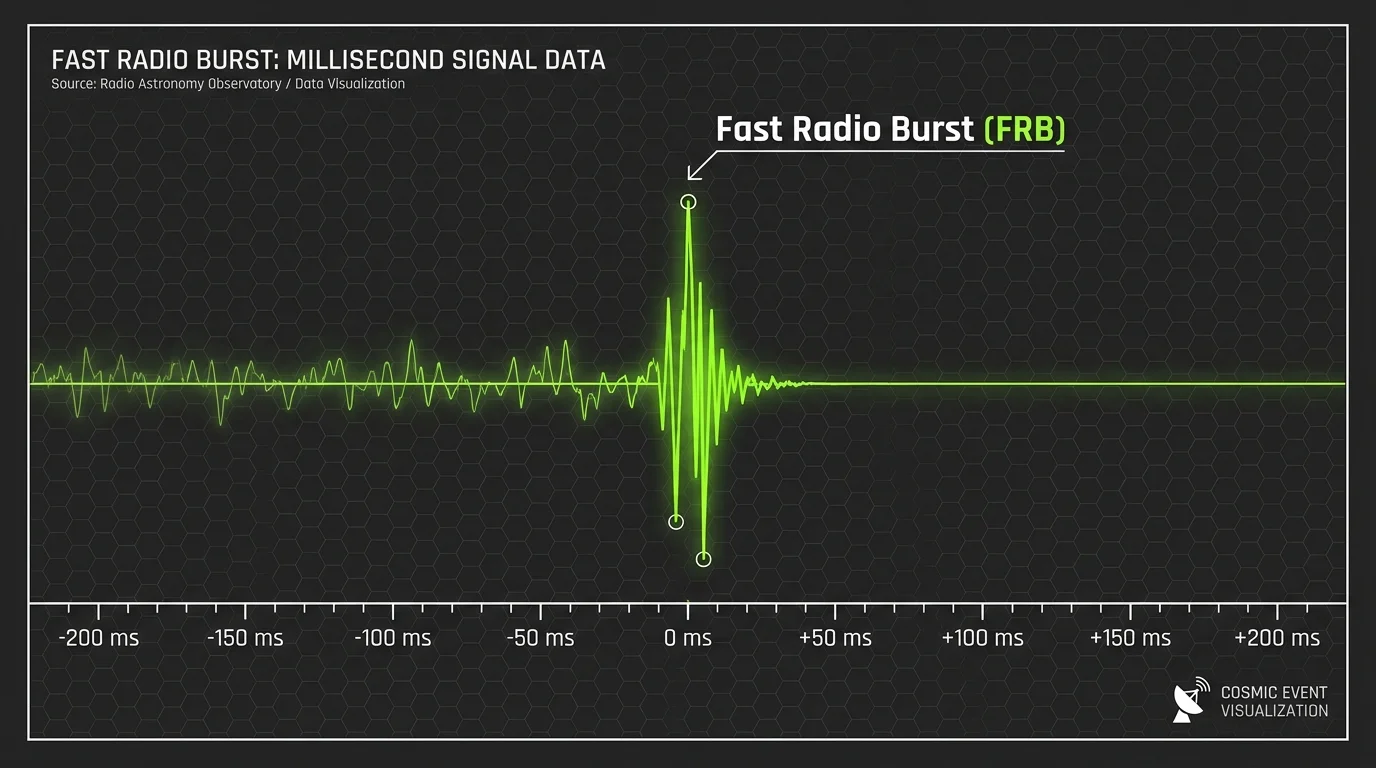
In 2007, astronomers sifting through archival pulsar data discovered a massive, millisecond-long burst of radio energy coming from outside our galaxy. These fast radio bursts release as much energy in a fraction of a second as the Sun does in an entire year. Recently, astronomers traced one such burst to a magnetar—a highly magnetized, rotating neutron star—located within our own Milky Way. While the exact mechanics of these eruptions still challenge researchers, using them as cosmic probes helps scientists map the distribution of matter. They offer a unique tool for understanding the thin, invisible gas between galaxies.
10. The Monsters in the Middle: Galactic Black Holes
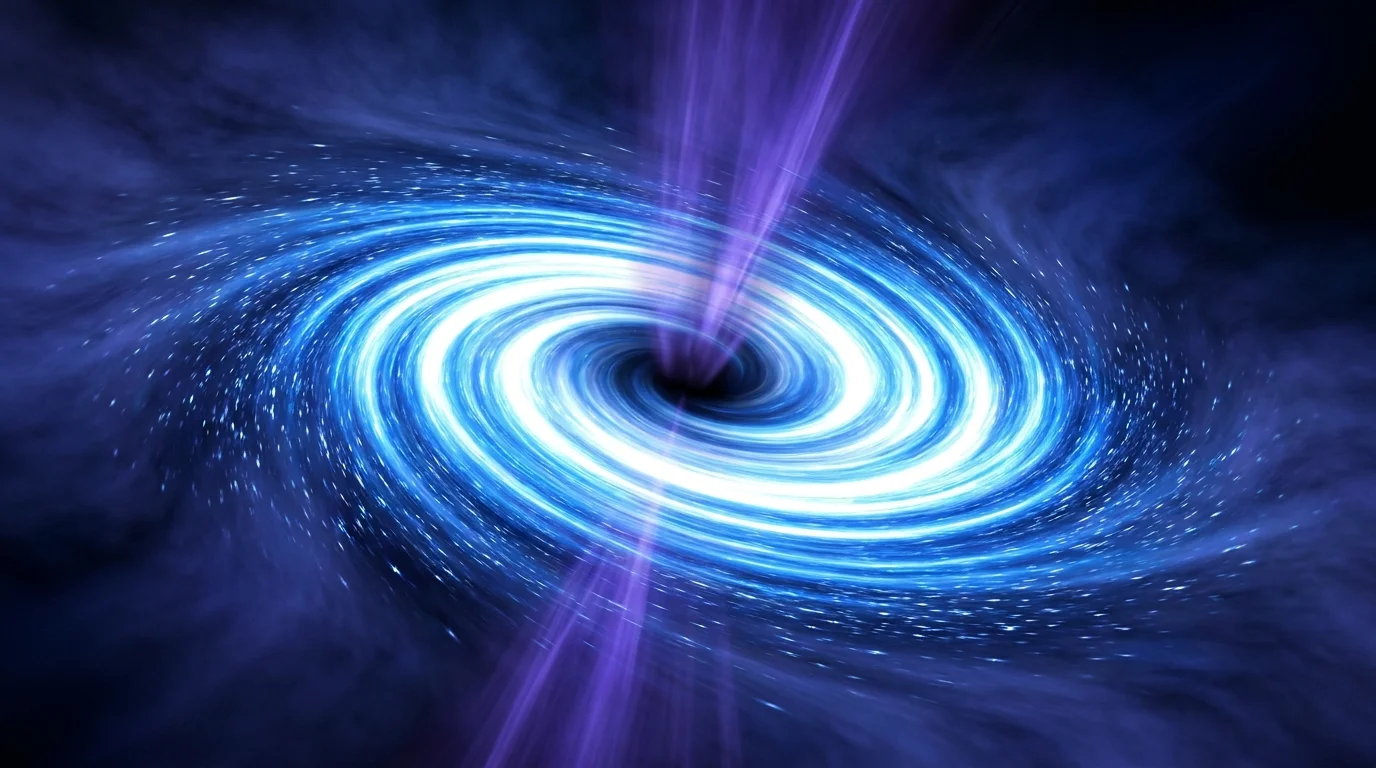
By painstakingly tracking the orbits of individual stars at the center of the Milky Way over several decades, astronomers proved the existence of Sagittarius A-star, a supermassive black hole harboring the mass of four million suns. Their research demonstrated that a compact, incredibly dense object drives the dynamics of the galactic core. Observations now suggest that nearly every large galaxy contains a supermassive black hole at its center. Understanding this relationship reveals how galaxies and their central black holes grow together over billions of years. It highlights a symbiotic cosmic evolution that dictates star formation rates and the overall structure of the universe you inhabit.

Global Impact: How Astrophysics Changes Life on Earth
You might wonder why investing billions of dollars into observing distant galaxies matters to your daily life. The truth is, the technology required to make these space discoveries inevitably trickles down to revolutionize terrestrial industries. The same image-processing algorithms developed to clarify fuzzy telescope pictures of distant stars now enhance medical resonance imaging and help doctors detect tumors earlier. When astronomers required better sensors to capture the faint light of the cosmos, engineers developed the charge-coupled devices that now serve as the camera sensors in your smartphone.
Furthermore, studying the extreme climates of other planets provides essential data for understanding Earth’s atmosphere. Observing the runaway greenhouse effect on Venus or the atmospheric stripping on Mars gives climate scientists concrete models to predict environmental changes here on Earth. Space exploration also drives global cooperation. The development of next-generation observatories requires the collaboration of thousands of engineers, physicists, and software developers across dozens of countries. The World Health Organization and various national space agencies frequently leverage satellite infrastructure and Earth-observation data to actively manage disease outbreaks and optimize agricultural yields. By studying the cosmos, humanity fosters a shared sense of purpose and develops technological infrastructure that improves global communications, weather forecasting, and disaster response.

Expert Voices on the Cosmic Frontier
Astrophysicists frequently emphasize that every major astronomical discovery uncovers a deeper layer of mystery. When discussing the implications of dark energy, leading cosmologists note that realizing we only understand five percent of the universe’s total makeup is a profoundly humbling experience. Researchers publishing in the journal Nature consistently highlight that modern astronomy is no longer about isolated breakthroughs; it is a discipline defined by massive, data-driven collaboration spanning continents.
Policy makers and space agency directors view these discoveries as essential drivers of human capital. By funding deep-space missions, governments inspire the next generation of scientists, mathematicians, and engineers. Educational leaders point out that children who look at images from space telescopes often pursue careers in STEM fields, ultimately driving innovation in completely unrelated sectors such as renewable energy, artificial intelligence, and biomedical engineering. The consensus among the scientific community is clear: pushing the boundaries of what you know about the universe fundamentally strengthens your technological capabilities at home.
Frequently Asked Questions
How do scientists know the age of the universe?
Astronomers determine the age of the universe by measuring the rate of cosmic expansion and mapping the cosmic microwave background. By calculating how fast galaxies are moving apart and working backward, and by examining the cooling patterns of the radiation left over from the Big Bang, scientists confidently place the universe’s age at roughly 13.8 billion years.
Can you travel to an exoplanet?
The closest known exoplanet, Proxima Centauri b, is over four light-years away. With contemporary propulsion technology, a spacecraft would take tens of thousands of years to reach it. Future breakthroughs in propulsion physics will be necessary before interstellar travel becomes a practical reality for human explorers.
What happens if you fall into a black hole?
If you were to fall into a stellar-mass black hole, the immense difference in gravitational pull between your head and your toes would stretch your body into a thin string of atoms—a process aptly named spaghettification. Eventually, you would pass the event horizon, the point beyond which not even light can escape, and join the singularity at the center.
Is there a difference between dark matter and dark energy?
Dark matter and dark energy serve entirely different functions. Dark matter exerts a gravitational pull, acting as the invisible cosmic scaffolding that holds galaxies together. Dark energy, conversely, acts as a repulsive force that drives the accelerated expansion of the universe. Together, they dominate the mass-energy composition of the cosmos.
Looking Forward: The Next Great Cosmic Mysteries
The upcoming decade promises an explosion of astronomical data that will challenge everything you think you know about the universe. The Vera C. Rubin Observatory in Chile will soon begin a ten-year survey of the southern sky, capturing the widest and fastest catalog of the cosmos ever attempted. This immense dataset will track billions of galaxies and monitor potentially hazardous near-Earth asteroids, providing unparalleled insights into the behavior of dark matter and dark energy over time.
Simultaneously, the search for biosignatures in the atmospheres of distant exoplanets accelerates. Next-generation space telescopes will analyze the chemical composition of alien atmospheres, looking for oxygen, methane, and other potential markers of biological activity. Missions targeting Jupiter’s moon Europa and Saturn’s moon Titan will plunge into thick atmospheres and scan subsurface oceans, actively seeking signs of extraterrestrial life in our own solar system. As researchers refine their instruments and push the boundaries of quantum physics and relativity, the universe will undoubtedly reveal new phenomena that defy current scientific understanding. You stand on the precipice of a new era of cosmic exploration, where the answers to humanity’s oldest questions remain just a telescope observation away.