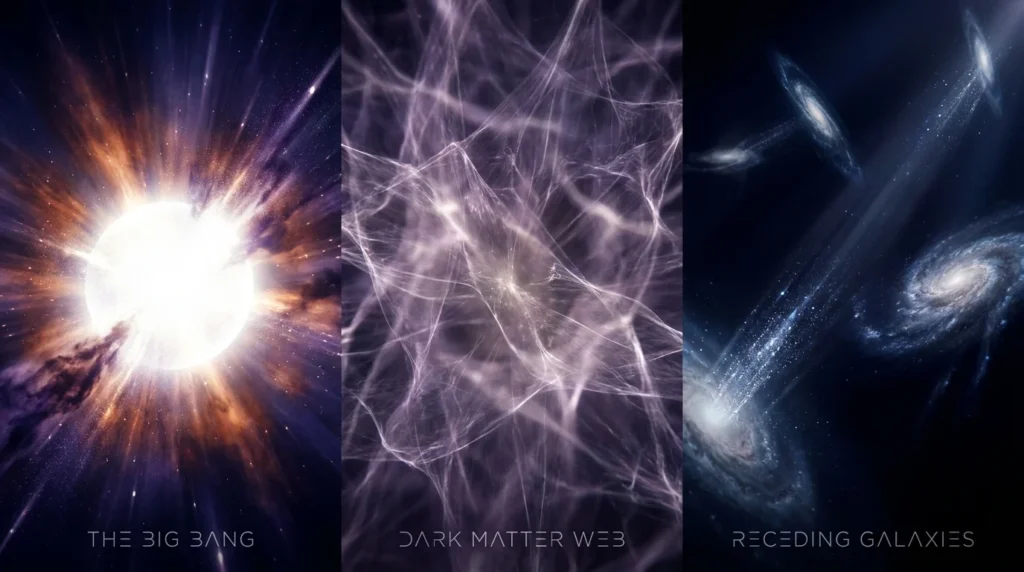
Modern physics and cosmology frequently push the boundaries of human imagination, offering explanations for our universe that seem pulled directly from the pages of a cyberpunk novel. You can now explore mind-bending concepts like the multiverse, simulation theory, and time-crystal structures that scientists actively research in laboratories worldwide. Researchers at leading institutions use advanced particle accelerators and quantum computers to test these bizarre frameworks, shifting them from philosophical thought experiments into rigorous scientific inquiries. Understanding these eight radical theories gives you a practical glimpse into the fundamental mechanics of reality and the future of human technological achievement, revealing exactly how the impossible slowly becomes established fact.
Bizarre Discoveries and the Frameworks of Reality
1. The Multiverse and Cosmic Inflation
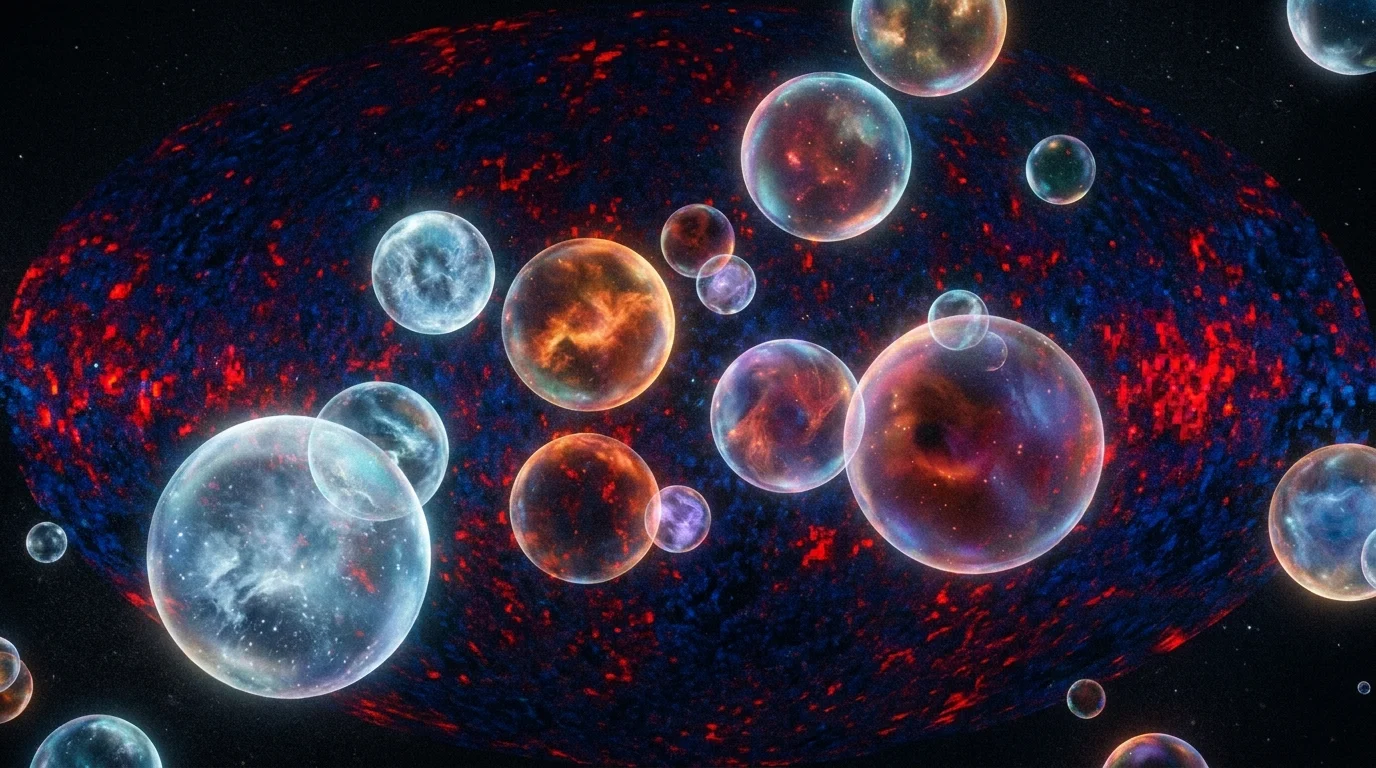
Our observable universe spans roughly 93 billion light-years in diameter, yet cosmologists suggest it represents merely a fraction of total reality. The theory of cosmic inflation posits that moments after the Big Bang, space expanded exponentially. In isolated pockets where inflation continues eternally, separate universes constantly form, creating a vast bubble-bath multiverse. Each bubble could possess entirely different laws of physics. You can look at maps of the cosmic microwave background radiation to see the foundational mathematical evidence supporting this model. While you cannot travel to these alternate realities, understanding their statistical probability helps you grasp exactly why our specific universe features the precise constants required to support biology.
2. The Simulation Hypothesis
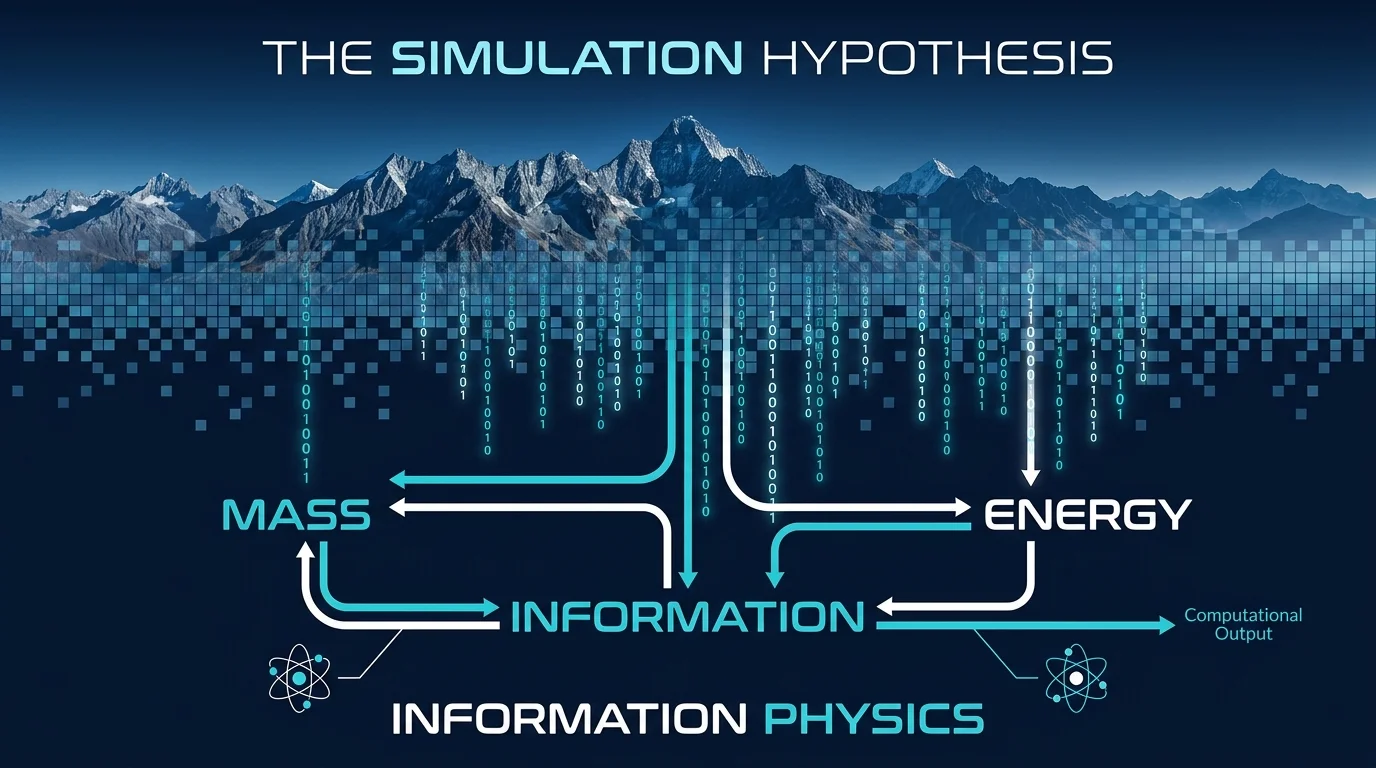
Philosophers and theoretical physicists increasingly debate whether human reality operates as a highly advanced computer simulation. Researchers today apply rigorous information physics to systematically test the idea. Physicists recently proposed experiments designed to detect the physical mass of digital data, suggesting that if the universe functions as a simulation, information itself must serve as a fundamental building block alongside mass and energy. By studying subatomic behavior and looking for resolution pixelation limits in spacetime, you can see how scientists treat reality as a computational output rather than a tangible absolute. Grasping this theory encourages you to view classical mechanics through the lens of data processing.

3. Time Crystals
Most conventional crystals, such as diamonds, consist of atoms rigidly arranged in repeating spatial patterns. In 2012, theoretical physicist Frank Wilczek mathematically proposed a new phase of matter called a time crystal, where the atomic structure repeats across time. The trapped particles constantly move and oscillate without ever consuming or losing energy. Google researchers recently utilized their Sycamore quantum processor to synthesize a working time crystal. You can leverage the research published in Nature to understand how time crystals could eventually power stable quantum computers. This breakthrough promises to directly revolutionize everyday technology, from accelerating molecular drug discovery to securing global communications.

4. Lithopanspermia and the Cosmic Origins of Life
The theory of lithopanspermia boldly suggests life did not originally spark on Earth; instead, resilient microbial life hitchhiked across the solar system trapped inside meteorites. Astrobiologists lend serious weight to this hypothesis by studying extremophiles—organisms like tardigrades that survive the freezing vacuum of open space. Recent international retrieval missions, including NASA’s OSIRIS-REx, returned pristine geological samples containing uracil and amino acids. When you analyze these extraterrestrial chemical precursors, you realize that the fundamental ingredients for biology drift abundantly throughout the galaxy. This research practically guides how you approach the search for organic signatures on Mars or beneath the icy crusts of Jovian moons like Europa.
5. The Holographic Principle
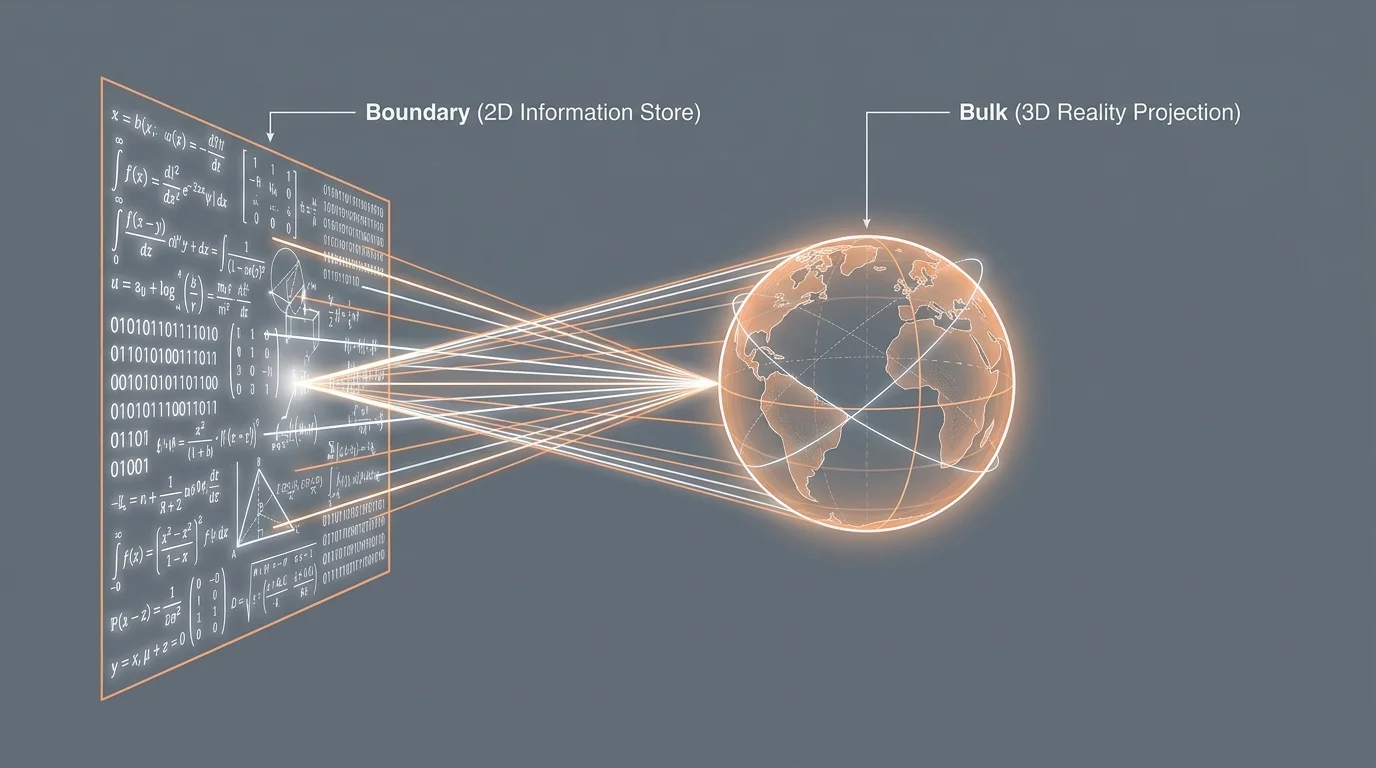
Theoretical physicists developed the holographic principle to resolve stubborn paradoxes occurring at the intersection of black holes and quantum mechanics. The paradigm-shifting theory suggests our three-dimensional universe acts merely as a projection of two-dimensional information encoded on a distant cosmic boundary. Imagine looking at a high-security hologram stamped on a credit card; the entirely flat surface contains all the raw data needed to generate a three-dimensional image. String theorists argue that gravity and quantum mechanics align perfectly only if you drop one spatial dimension from the equations. Understanding this principle fundamentally changes how you perceive physical space, implying that geometric depth represents an elegant cognitive illusion.

6. Orchestrated Objective Reduction in Consciousness
Human consciousness remains a fiercely debated mystery in modern science. Nobel laureate Sir Roger Penrose and anesthesiologist Stuart Hameroff developed the Orchestrated Objective Reduction theory, proposing that consciousness originates directly from quantum vibrations inside microtubules within your brain neurons. Mainstream neuroscience traditionally views the human brain as far too noisy for delicate quantum effects, but recent discoveries in quantum biology prove quantum phenomena regularly operate within organic environments. If you follow this specialized research, you recognize that your daily thoughts might rely heavily on the universe’s fundamental quantum geometry. This perspective could radically transform how medical professionals treat severe neurological diseases.
7. White Holes and Quantum Bounces
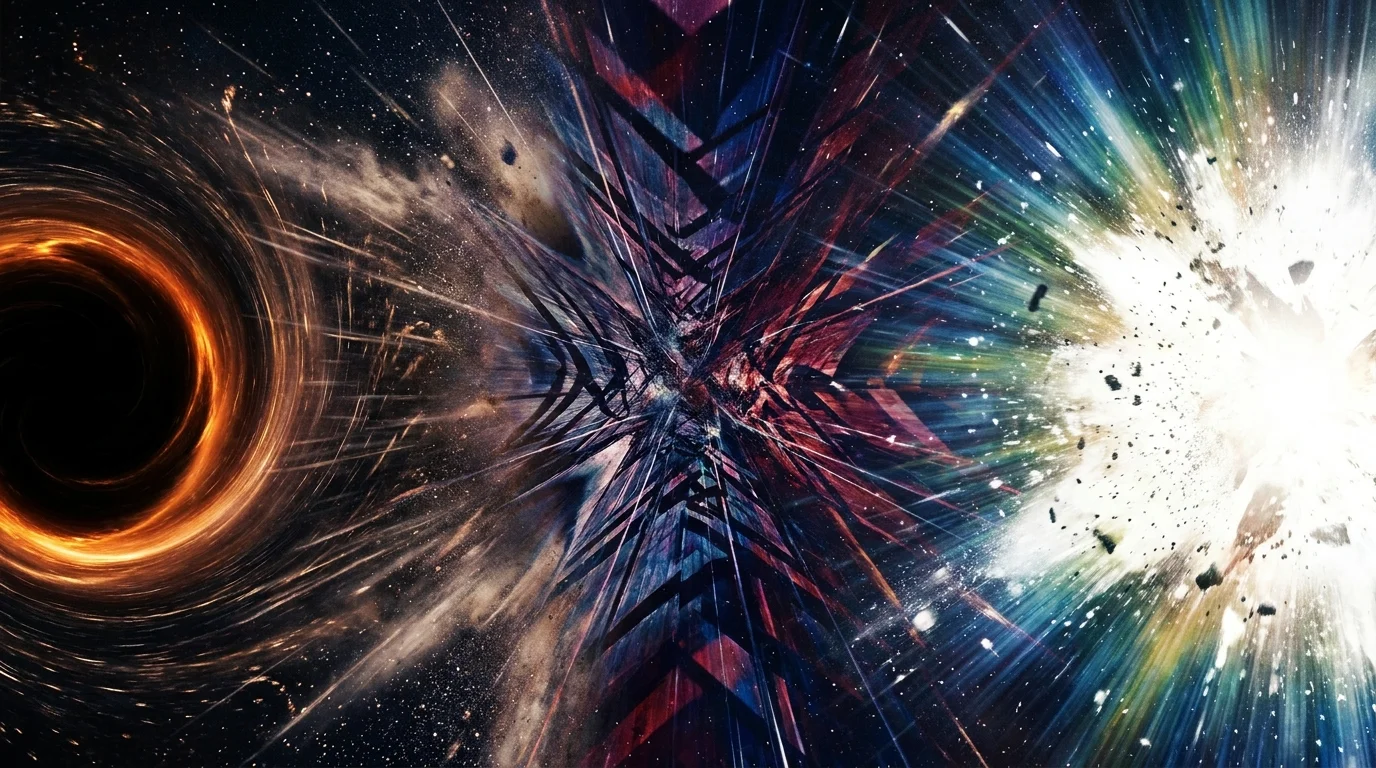
General relativity elegantly describes black holes as regions where gravity becomes so intense that not even light escapes. Astonishingly, the exact same mathematical equations allow for the absolute opposite physical phenomenon: white holes. A white hole operates as a violent cosmic fountain that constantly ejects matter and bright light, fundamentally preventing any external object from ever entering it. Theoretical physicists currently apply loop quantum gravity to suggest that dying, evaporating black holes eventually rebound and abruptly transition into white holes. While astronomical telescope surveys have yet to capture a white hole on camera, the underlying mathematics practically demand their existence as a crucial stepping stone toward uniting gravitational physics with quantum mechanics.

8. The Dark Forest Theory of the Fermi Paradox
If the visible universe contains billions of habitable exoplanets, why have you never seen clear evidence of intelligent alien civilizations? Astrobiologists and game theorists increasingly apply the Dark Forest theory to elegantly explain this cosmic silence. The concept posits that the universe acts like a dark, dangerous forest filled with armed hunters. Any developing civilization that openly broadcasts its location instantly risks immediate annihilation by hyper-advanced, predatory species; therefore, intelligent life naturally chooses to hide and observe silently to ensure survival. By studying this strict game-theory approach to astrobiology, researchers critically evaluate international human initiatives like Active SETI, forcing you to weigh the severe existential risks of beaming radio messages into deep space.
Global Impact of Fringe Physics
These theoretical frameworks actively shape high-stakes global technological investments. Governments and private technology sectors across the United States, China, and the European Union currently pour billions of dollars into quantum computing facilities and high-energy particle physics to harness anomalies that once seemed like pure fiction. When laboratory physicists crack the precise mechanics of time crystals, you directly benefit from enhanced commercial computing power capable of accurately modeling complex climate systems or simulating molecular interactions for rapid pharmaceutical breakthroughs.
Furthermore, the persistent search for life through the theoretical lens of panspermia directly drives international space policy. Space agencies globally coordinate complex missions to enforce strict planetary protection protocols, actively preventing Earth microbes from contaminating pristine alien environments. As you watch international coalitions collaboratively build next-generation radio observatories like the Square Kilometre Array across Africa and Australia, you witness a deeply unified human effort to probe the holographic boundaries of spacetime.

Expert Voices Shaping Tomorrow
Leading astrophysicists and quantum researchers frequently highlight how vital creative imagination remains in the rigorous scientific method. Scientists advocating for unconventional astrophysics strongly argue for systematically investigating anomalous cosmic data, reminding the public that quickly dismissing unconventional ideas severely stifles genuine scientific discovery. Experts emphasize that you must allow empirical evidence, rather than conservative prejudice, to guide your understanding of phenomena that closely resemble science fiction narratives.
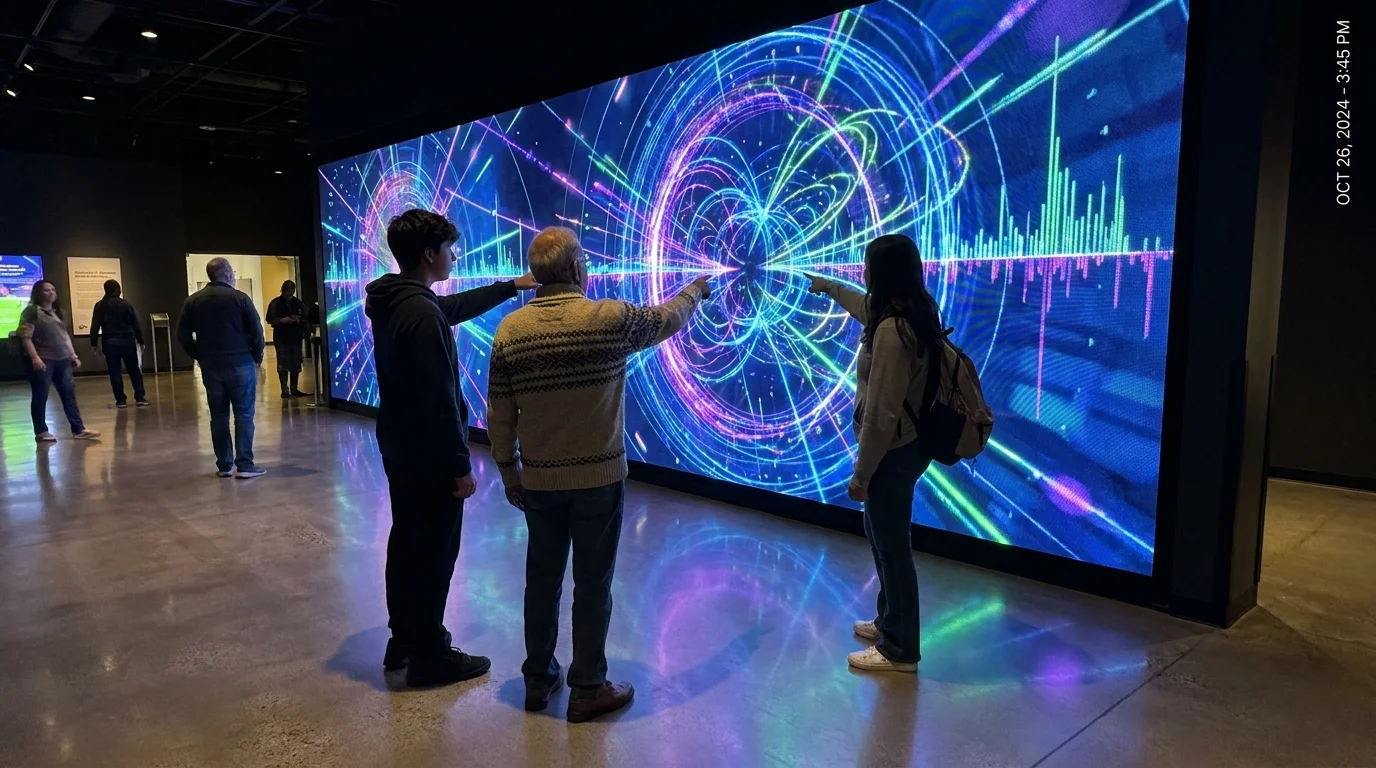
Similarly, administrative leaders at the European Organization for Nuclear Research emphasize that pushing deep theoretical boundaries requires immense collaborative patience and decades of sustained funding. They frequently note that the famous Higgs boson existed purely as a mathematical ghost on chalkboards for half a century before massive physical experiments vindicated the original theorists. When you carefully listen to these respected international scientific voices, you rapidly understand that today’s wild hypothesis often functions as the exact foundational blueprint for tomorrow’s engineering triumph.
Frequently Asked Questions
How do scientists actually test untestable theories like the multiverse?
Testing the multiverse relies entirely on capturing indirect evidence found within our observable universe. Cosmologists meticulously search for minute anomalies in the cosmic microwave background radiation, looking specifically for unexplained cold spots or abnormal polarization patterns. These physical anomalies might strongly indicate an ancient collision with a neighboring parallel universe. You must rely on advanced statistical computer models and next-generation space telescopes to identify these incredibly subtle cosmic scars.
Will discoveries like time crystals change your everyday technology?
Yes; while currently confined to ultra-cold quantum laboratories, time crystals offer extraordinary thermodynamic stability for delicate quantum states. This inherent stability powerfully protects fragile quantum qubits from destructive environmental interference. Over the next few decades, you will likely see this exotic technology seamlessly integrated into commercial quantum computers, ultimately leading to unbreakable cybersecurity encryption methods and highly optimized logistics networks that instantly solve impossible supply chain mathematics.
Is there any concrete mathematical proof that we live in a simulation?
Currently, you have no definitive proof supporting the simulation hypothesis. Experimental physicists actively look for specific universal signatures, such as maximum speed limits for traveling particles, which perfectly mimic the processing limits of a computer processor. Researchers also intensely study the fundamental error-correcting codes embedded in nature to determine if the universe operates on discrete computational algorithms, though the theory remains hotly debated globally.
Why haven’t professional astronomers found photographic evidence of white holes yet?
White holes theoretically form only at the absolute end of a supermassive black hole’s incredibly long life cycle. Because black holes evaporate at an agonizingly slow pace through subtle Hawking radiation, our current universe simply may not be old enough for any primary white holes to have actually formed yet. You might also discover that their violent explosive signatures look virtually identical to standard cosmic gamma-ray bursts, heavily disguising their true nature in astronomical datasets.
Forward Look: Testing the Impossible
The rapidly approaching decade promises unprecedented analytical opportunities to firmly transition these science-fiction concepts into verified physical realities. As orbital platforms like the James Webb Space Telescope continually analyze the atmospheric compositions of distant exoplanets, you inch closer to firmly detecting chemical bio-signatures that could validate long-standing astrobiological models. Simultaneously, planned high-energy upgrades to the Large Hadron Collider will forcefully smash subatomic particles at previously unrecorded energies, directly probing the hidden microscopic dimensions required by string theory.
While certain vast conceptual frameworks like the infinite multiverse may forever remain beyond direct human observation, the passionate pursuit of these cosmic mysteries relentlessly drives humanity’s broader technological progress. You now stand squarely on the exciting precipice of a completely new physical understanding, where the wonderfully strange continually intersects to reshape your practical world.