Science progresses through rigorous testing, but history is littered with hypotheses that triggered catastrophic consequences when subjected to the real world. You rely on modern safety regulations, ethical review boards, and environmental protections that were drafted in the direct aftermath of colossal research failures. From radioactive criticality accidents in secret laboratories to miscalculated atmospheric detonations and escaped biological agents, these missteps provide a profound blueprint for how humanity manages risk. Examining these disasters reveals exactly how strict containment protocols and international research standards evolved. By exploring these nine devastating scientific errors, you gain practical insights into the delicate balance between pushing the boundaries of human knowledge and protecting the fragile ecosystems we inhabit.

When Ambition Outpaces Reality: The Discovery Deep Dive
Every major scientific leap involves stepping into the unknown. However, researchers occasionally misjudge the variables involved in their hypotheses. When researchers conduct experiments without fully understanding complex interconnected systems, the localized tests can rapidly spiral out of control. By analyzing these nine monumental errors, you can trace the exact origins of the safety protocols that govern modern scientific inquiry.

1. The Demon Core and the Slipping Screwdriver
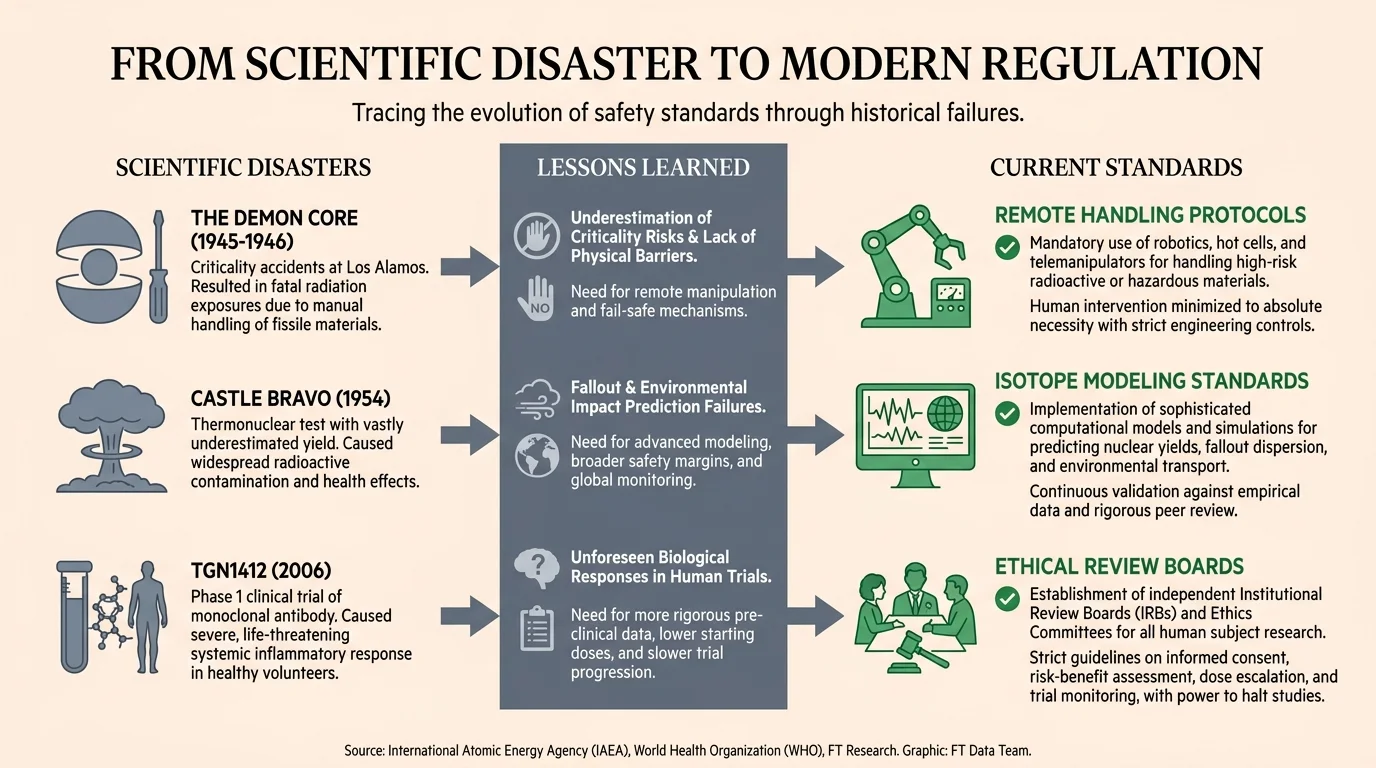
During the rapid development of nuclear technology in 1946, physicist Louis Slotin conducted an incredibly risky experiment at the Los Alamos laboratory. He aimed to determine the exact point at which a plutonium sphere—infamously dubbed the Demon Core—would achieve a self-sustaining nuclear chain reaction. Instead of using the approved safety shims to separate two beryllium hemispheres around the core, Slotin used a standard flathead screwdriver. The blade slipped; the upper hemisphere fell completely shut. This instantly triggered a critical reaction, emitting a brilliant flash of blue radiation. Slotin quickly flipped the top shell off, saving his colleagues in the room, but he absorbed a lethal dose of neutron radiation and died nine days later. This disaster permanently eliminated hands-on criticality experiments, forcing facilities to implement remote-control manipulator arms for all dangerous radioactive testing.
2. Castle Bravo and the Lithium Miscalculation
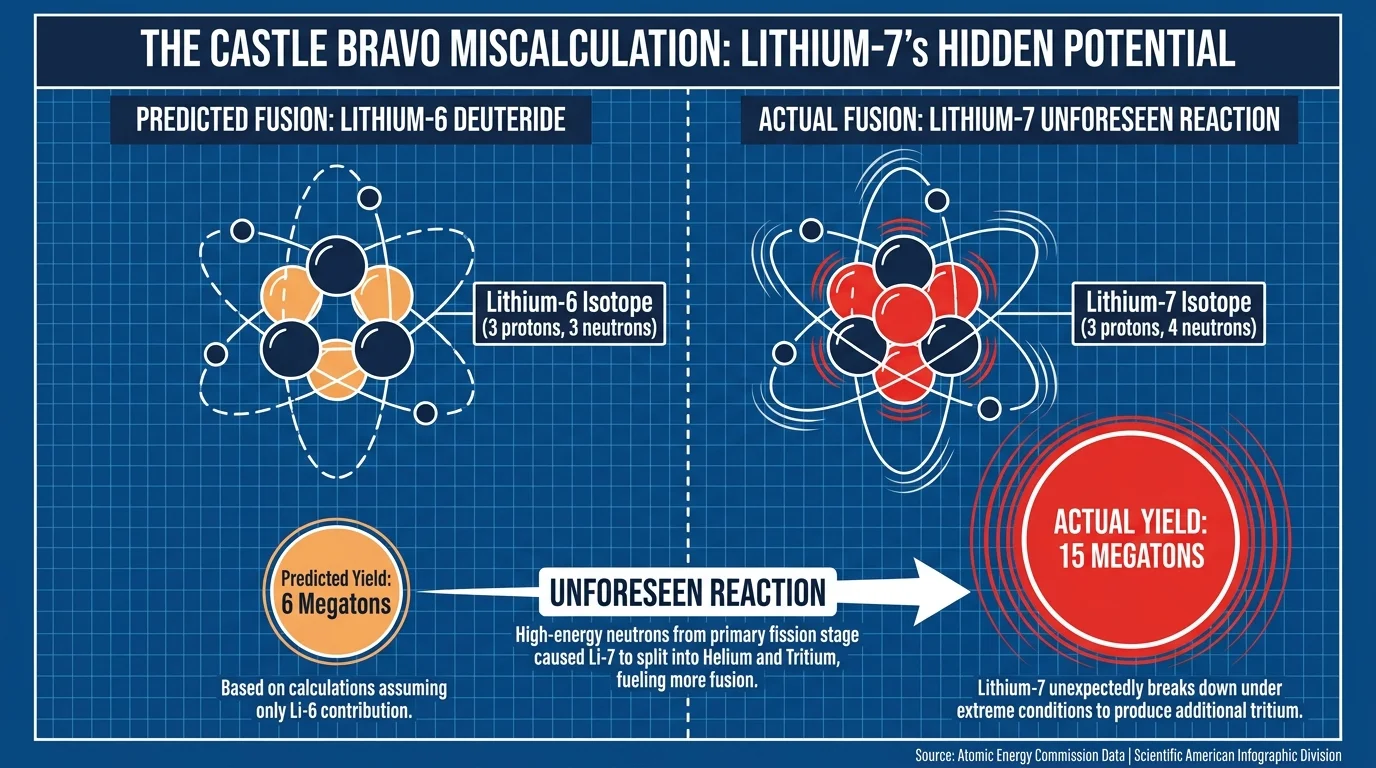
In 1954, the United States conducted the Castle Bravo nuclear test at Bikini Atoll in the Pacific Ocean. Theoretical physicists designed the thermonuclear device using a mix of lithium-6 and lithium-7 isotopes. The scientific consensus at the time dictated that lithium-7 would remain completely inert during the blast. They were catastrophically wrong. The extreme heat and pressure caused the lithium-7 to react violently, contributing massive amounts of additional energy to the detonation. Instead of the anticipated six-megaton yield, the bomb exploded with a force of fifteen megatons. The resulting radioactive fallout spread far beyond the established safety zones, severely contaminating the crew of a Japanese fishing vessel and forcing the permanent evacuation of several Marshall Islands atolls. This miscalculation underscored the dire need for exhaustive chemical isotope modeling before field testing.
3. The Escape of the Africanized Honey Bee
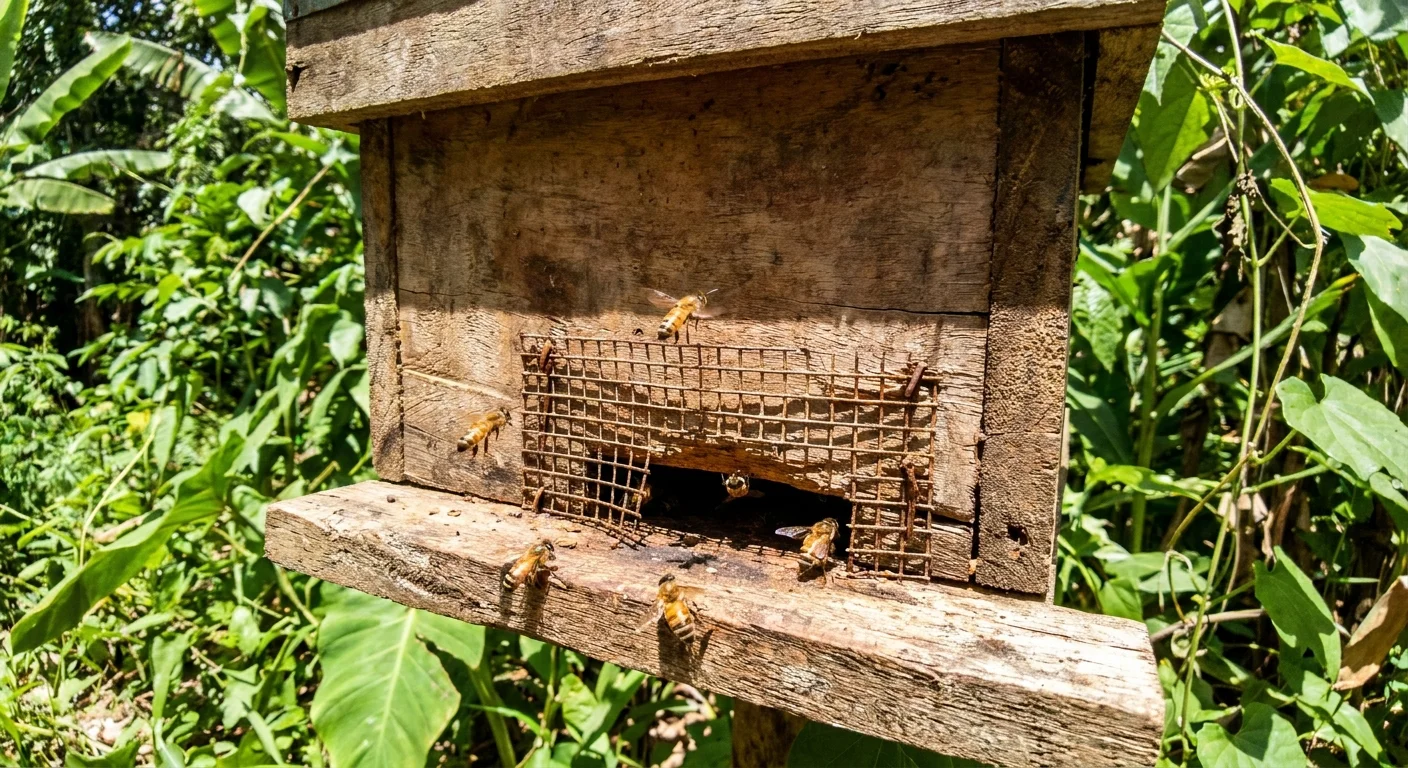
Seeking to boost honey production in tropical climates, Brazilian geneticist Warwick E. Kerr imported resilient African honey bees in 1956 to crossbreed them with European variants. He housed the experimental hives near Rio Claro, utilizing special excluder screens to prevent the fertile queens from escaping into the local environment. However, a visiting beekeeper noticed the screens were blocking worker bees and removed them, completely unaware of the experiment’s containment requirements. Twenty-six hybrid queens escaped into the wild. The resulting Africanized honey bees multiplied rapidly and spread across South and North America. Their highly aggressive defensive behavior fundamentally altered agricultural practices and pest management strategies across two continents, serving as a permanent reminder of the immense difficulty of biological containment.

4. Biosphere 2 and the Collapsing Artificial Ecosystem
In 1991, an ambitious team sealed eight individuals inside a massive glass enclosure in the Arizona desert. This project aimed to replicate Earth’s ecosystems to test the viability of closed-loop habitats for future space colonies. The designers meticulously selected plants, animals, and soil microbiomes to sustain human life indefinitely. However, researchers failed to account for the chemical properties of the facility’s exposed concrete. The curing concrete rapidly absorbed carbon dioxide, which cascadingly disrupted the internal oxygen cycle. Oxygen levels plummeted from a healthy 21 percent to a dangerous 14.2 percent—roughly equivalent to living at an elevation of 17,000 feet. The crew suffered from severe fatigue and internal interpersonal conflicts, eventually forcing outside engineers to pump pure oxygen into the habitat. The failure revolutionized our understanding of closed ecological systems, proving that replicating the natural balance of Earth’s biosphere is currently beyond human engineering.
5. The Mars Climate Orbiter Metric Mix-Up
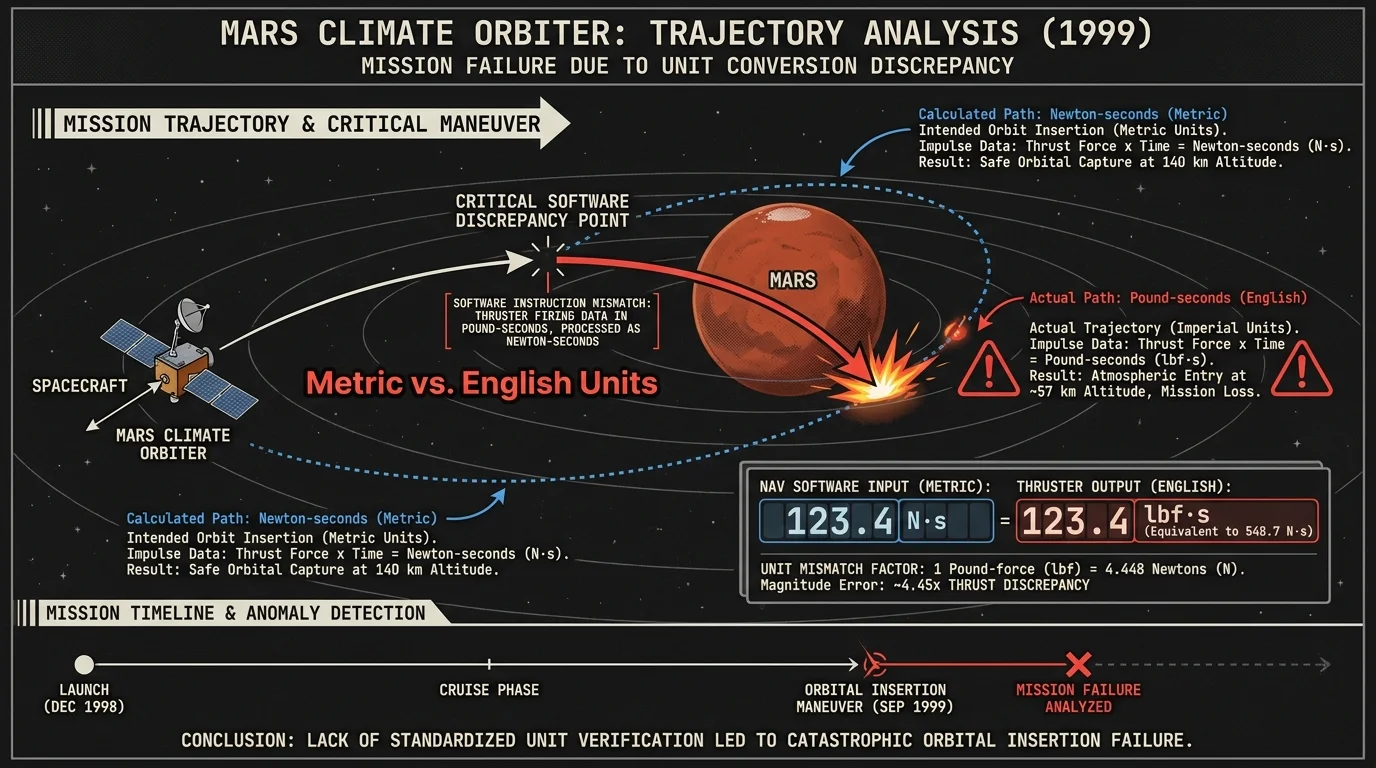
Space exploration demands unparalleled precision, yet one of the most embarrassing failures in planetary science came down to basic unit conversion. In 1999, the Mars Climate Orbiter approached the Red Planet to study its atmosphere and climate history. As the spacecraft executed its orbital insertion maneuver, it plunged too deeply into the Martian atmosphere and disintegrated. Investigations revealed a fatal communication breakdown between the engineering teams. Lockheed Martin provided critical thruster performance data in English units of pound-seconds, while the NASA navigation team assumed the data was in the metric system standard of newton-seconds. This 125-million-dollar loss forced global aerospace organizations to enforce strict standardization protocols across all international and corporate data sharing.
6. The TGN1412 Immune Storm
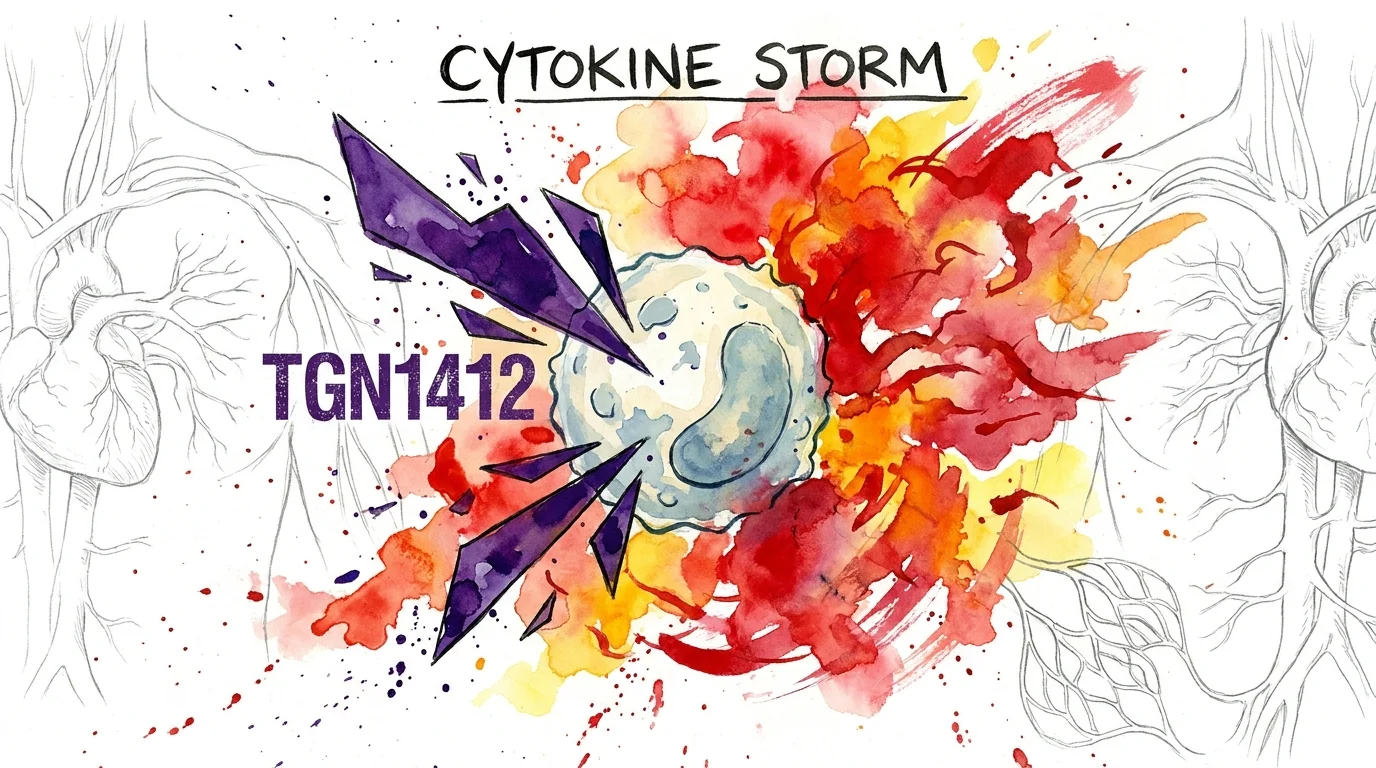
Medical researchers in London launched a Phase 1 clinical trial in 2006 for TGN1412, a novel monoclonal antibody intended to treat leukemia and autoimmune diseases. Preclinical trials demonstrated remarkable safety in macaque monkeys, even at doses five hundred times larger than those planned for human subjects. When six healthy human volunteers received the trial dosage concurrently, their immune systems reacted with devastating hostility. Within hours, all six men suffered multiple organ failure brought on by a catastrophic cytokine storm. Researchers discovered too late that human CD28 receptors operate differently than those in macaques, triggering a runaway immune response rather than the intended therapeutic suppression. The volunteers survived only through emergency intensive care interventions. This tragedy radically altered pharmaceutical regulations, mandating sequential dosing—treating one patient at a time and waiting for adverse reactions—in all first-in-human clinical trials globally.

7. Project West Ford and the Copper Orbit
During the height of the Cold War in 1961, the United States military feared that adversarial forces might cut transatlantic undersea communication cables. To guarantee secure global communication, the military launched Project West Ford. The experiment involved dispersing 480 million microscopic copper needles into low Earth orbit to form an artificial ionosphere capable of bouncing radio waves across the globe. While the communications test technically worked, it sparked immediate global outrage. Astronomers worldwide protested that the cloud of debris severely interfered with astronomical observations. Although the designers claimed solar radiation would push the needles out of orbit within a few years, clumps of the copper wire remain in orbit today. This massive overreach accelerated the drafting of the Outer Space Treaty, which established international frameworks for conducting experiments beyond Earth’s atmosphere.
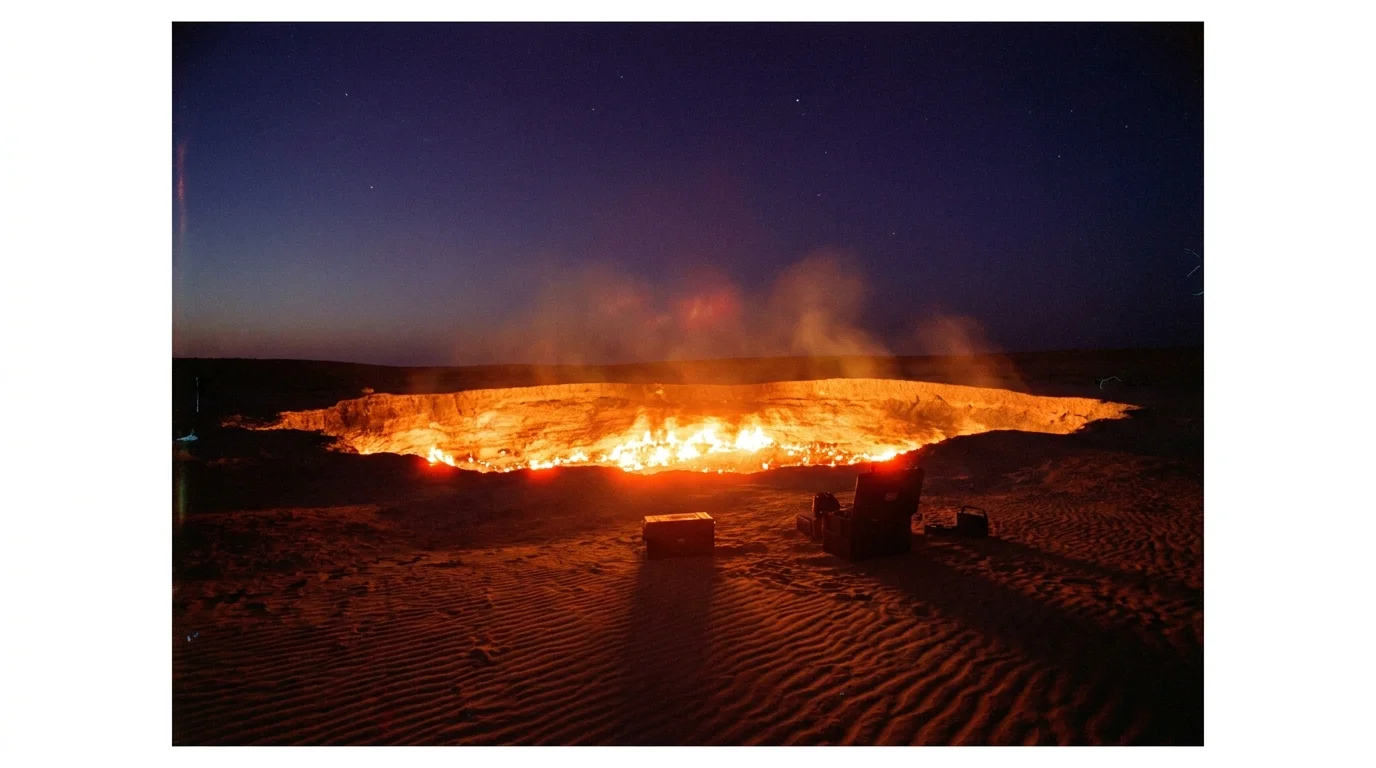
8. The Darvaza Gas Crater Ignition
In 1971, a team of Soviet geologists drilling for oil in the Karakum Desert of Turkmenistan accidentally breached a massive subterranean natural gas cavern. The ground beneath the drilling rig collapsed, creating a crater seventy meters wide and swallowing the heavy equipment. Fearing the unchecked release of toxic methane gas into nearby local villages, the scientists decided to ignite the crater. They calculated that the residual gas would burn out within a few weeks. More than half a century later, the Gates of Hell crater continues to burn brightly. This spectacular miscalculation highlights the vast unpredictability of geological reserves and provides you with a stark visual representation of humanity’s struggle to control subterranean natural forces.

9. Starfish Prime and the Artificial Radiation Belt
Desiring to understand the effects of nuclear detonations in space, the United States executed the Starfish Prime experiment in 1962. The military detonated a 1.4-megaton warhead 250 miles above the Pacific Ocean. Researchers grossly underestimated the resulting electromagnetic pulse and the persistence of the radiation injected into the Earth’s magnetic field. The explosion generated an artificial radiation belt that crippled a third of all satellites in low Earth orbit, including the world’s first active communications satellite, Telstar 1. Down on Earth, the electromagnetic pulse traveled hundreds of miles, blowing out streetlights and disrupting telephone services across Hawaii. The devastating secondary effects demonstrated the severe vulnerability of modern electrical infrastructure to high-altitude energetic bursts.
Global Impact: Transforming Health, Technology, and the Environment
You encounter the legacy of these failed experiments every time you interact with modern societal infrastructure. The Mars Climate Orbiter disaster accelerated the adoption of global ISO standards, ensuring that technologies manufactured across different continents interface seamlessly. In the medical field, the harrowing TGN1412 trial overhauled the entire framework of global pharmacovigilance. Whenever you take a new prescription medication, your safety is underwritten by the cautious sequential testing rules implemented directly after that London tragedy.
Ecologically, the escape of Africanized honey bees forced agricultural sectors across the Americas to innovate entirely new apiary management techniques. These catastrophic failures teach us that science does not operate in a vacuum; an error in a localized laboratory can swiftly escalate into a global environmental crisis. The legislative responses to these events—ranging from strict Institutional Review Board requirements to comprehensive environmental impact assessments—now serve as the primary protective barrier between theoretical science and public health.

Expert Voices on Managing Scientific Unknowns
Modern researchers recognize that pushing the boundaries of human knowledge inherently involves engaging with the unknown. According to global bioethics and aerospace regulatory bodies, the goal is not to eliminate risk entirely, as doing so would halt all innovation. Instead, experts emphasize the absolute necessity of rigorous failure analysis. Current engineering philosophies treat every catastrophic malfunction as a systemic data point. By analyzing exactly how and why a system breached its containment parameters, safety engineers can design redundant fail-safes that protect both the researchers and the general public.
Ethicists increasingly advocate for broad, interdisciplinary oversight panels. Today, an experiment with high environmental stakes requires evaluation not just from specialized scientists, but also from ecologists, sociologists, and community stakeholders. This collaborative approach significantly reduces the blind spots that historically allowed researchers to overlook vital variables—such as the curing concrete in Biosphere 2 or the unique human immune pathways in the TGN1412 trial.
Frequently Asked Questions
How do modern scientists prevent catastrophic errors during high-risk experiments?
Today, researchers rely on a multilayered approach to risk management. Modern experiments must pass through independent review boards, undergo extensive computer simulations, and follow strict tiered testing protocols. By forcing research to advance through incremental phases, scientists isolate variables and identify dangerous anomalies long before an experiment scales up to a real-world environment.
Can biological containment ever be guaranteed?
Absolute guarantee remains an elusive goal in biological research. Living organisms are inherently adaptable and unpredictable. Facilities handling dangerous pathogens or invasive species utilize negative air pressure, specialized filtration systems, and multiple physical airlocks. However, human error remains the most significant variable, meaning containment requires constant vigilance and continuous training updates rather than blind reliance on technology.
What role does international law play in preventing unsafe space experiments?
International treaties form the backbone of safe space exploration. Following Cold War-era orbital experiments, the United Nations established frameworks to prevent the militarization of space and the unchecked generation of orbital debris. Space agencies must coordinate their launches and operational frequencies to ensure that a single nation’s experiment does not critically jeopardize the shared global orbital environment.
How did the TGN1412 trial change medical testing standards?
Before TGN1412, it was standard practice to administer first-in-human experimental drugs to a small group of volunteers simultaneously. After the tragedy, international health agencies mandated sequential dosing. Now, researchers must give the dose to one individual, wait for a specified observation period, and ensure no severe adverse reactions occur before proceeding to the next participant.
Looking Forward: The Next Era of Pioneering Research
As you look to the horizon, the scientific community is preparing to tackle experiments of unprecedented scale and complexity. Researchers are advancing gene-editing technologies like CRISPR, exploring artificial intelligence integration in critical infrastructure, and proposing ambitious geoengineering projects to combat climate change. These future endeavors carry immense potential to elevate the human condition, but they also possess the capacity for sweeping, unintended consequences.
The lessons extracted from the demon core, the burning desert crater, and the collapsing biosphere are more relevant now than ever before. You stand at the precipice of a new era of discovery, armed with the historical knowledge that nature rarely forgives a miscalculation. The resilience of future scientific innovation will depend entirely on how deeply we respect the unpredictable complexities of the natural world. By moving forward with meticulous caution and unwavering ethical oversight, the global scientific community can continue to demystify the universe while aggressively safeguarding the civilization that calls it home.